Understanding coffee processing methods is the most critical step in grasping how your favorite cup gets its flavor. In our previous post, Specialty Coffee Harvesting: 4 Secrets Behind the Perfect Cherry, we explored how the perfect, ripe coffee cherry is hand-picked. But harvesting is only the beginning of the story. To turn a fleshy, delicate fruit into a stable green bean capable of being stored and roasted, it must undergo processing.
What Is Coffee Processing?
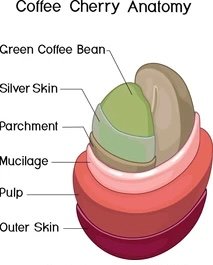
Inside every coffee cherry, the two seeds (which we know as coffee beans) are tightly wrapped in tightly layered anatomy: the tough outer skin (exocarp), the sweet fruit flesh (mesocarp/pulp), and a sticky, sugar-rich layer called mucilage.
The Core Objective: Coffee processing is the method used to safely remove these outer fruit layers and dry the seed down to a stable moisture content of 10% to 12%.
If the moisture remains too high, the coffee will mold and spoil; if it drops too low, the organic cell structure collapses, killing the flavor. How long the bean stays in contact with these sugary fruit layers during the drying stage completely dictates what you will taste in your morning cup.
Traditional Coffee Processing Methods & Their Flavor Profiles
There are three foundational ways coffee has historically been processed across the globe. Each yields a fundamentally different taste profile. Let’s break down the three traditional coffee processing methods used worldwide and see how they impact your cup.
1. The Washed Process (Wet Method) — The Blueprint for Clarity
Washed processing is often explained simply as “cleaner” coffee, but the real point is that it is a precise method designed to create exceptional flavor clarity and structure.
Step-by-Step: From Cherry to Parchment
- The Raw Material: It starts immediately at harvest. Because fermentation cannot “fix” bad raw material—it only amplifies what is already there—washed coffees require strict picking and sorting to ensure only perfectly ripe cherries enter the process.
- Depulping: The coffee cherry is fed through a mechanical depulper, which strips away the outer skin and most of the fruit flesh. However, depulping leaves behind a protective, shell-like layer called parchment, which remains surrounded by a highly sticky, sugary layer of mucilage.
- Controlled Fermentation: To break down this mucilage, the coffee is placed into fermentation tanks for anywhere between 6 to 72 hours (depending on the climate and local setup). This stage requires absolute control. Time, temperature, tank cleanliness, water quality, and sugar levels all influence whether the result stays pure or drifts into unwanted defect notes.
- Dry Fermentation: Done without adding water to the tank. It requires shorter fermentation times but is harder to control evenly.
- Wet Fermentation: The tank is filled with water. It takes longer, but the fermentation spreads more evenly throughout the mass, making it easier to repeat at a high-quality standard.
- Washing & Quality Control: After fermentation, the coffee is moved through long, sloped concrete channels with a steady stream of clean water. This rinses away all remaining residue. Crucially, these channels act as a built-in sorting tool: denser, high-quality beans sink and move slowly, while lower-quality or damaged beans float and are separated. Washing isn’t just cleaning—it is dynamic quality control.
- Soaking (Optional): Many exceptional washed lots undergo an extra step—soaking in clean water for a few hours up to a full day after washing. This stabilizes the coffee further, removes any micro-residues, and enhances that unique “sparkle” and purity in the cup.
- Careful Drying: Still protected inside its parchment shell, the clean coffee is dried to a stable 10-12% moisture level on raised beds, patios, or mechanical dryers. Drying speed must be carefully managed; drying too fast stresses the seed and kills its shelf-life. Once dry, the coffee rests in its parchment to stabilize before final milling and export.
How It Affects Flavor
Washed coffees typically taste bright, transparent, and structured. Because there is no heavy fruit mask covering the bean, it is much easier to spot the pure origin character, variety differences, and roast style choices.
The body is often lighter and more tea-like compared to syrupy naturals. Instead of a loud “fruit salad,” the complexity of a washed coffee shows up as layered florals, shifting citrus or stone fruits, delicate sweetness, and a long, laser-sharp finish.
2. The Natural Process (Dry Method) — Tradition Refined Through Technique
- The Definition: Natural coffee is a method of processing whole coffee cherries by drying them with the sweet pulp and outer skin entirely intact.
Step-by-Step: From Whole Cherry to Green Bean
- The Raw Material: Natural processed coffee, often just called natural or dry process, is one of the oldest and most traditional ways of turning coffee cherries into stable green coffee. Just like washed coffees, the process hinges heavily on meticulous cherry selection. Fermentation cannot “fix” under-ripe or damaged fruit; it will only amplify those flaws.
- Sun-Drying Whole: Instead of removing the fruit right after picking, the ripe coffee cherries are spread out whole onto concrete patios or raised African drying beds with the skin and pulp still on.
- The Slow Transformation: The entire fruit dries slowly under the sun for up to 3 to 4 weeks. As the outer cherry shrivels, darkens, and hardens, a natural, intense fermentation happens inside the skin. Producers must constantly turn the cherries throughout the day to ensure even drying and prevent mold. They also protect the cherries from overnight dew or unexpected rain.
- Hulling the Dried Fruit: Only after the whole cherries reach the ideal, stable moisture level of 10% to 12% are they collected. The dried, brittle outer fruit layers are then mechanically removed (hulled) at the dry mill to reveal the green coffee bean nested inside.
Why the Natural Processing Choice Matters
- Flavor Development & Complexity: Because the seed dries inside the intact cherry, it stays in extended contact with the natural sugars, organic acids, and fermentation by-products of the fruit. This allows the bean to act like a sponge, intensely enhancing the sweetness, body, and aromatic complexity. When controlled perfectly, high-quality naturals will show a beautiful balance of flavor intensity and clarity—yielding profiles that lean toward ripe fruit, wine-like or rum-like notes, and a heavy, syrupy mouthfeel, rather than just unpredictable “funk.”
- Water and Resource Efficiency: Unlike the washed process, which relies heavily on mechanical pulping, deep fermentation tanks, and repeated water rinsing, natural processing uses virtually no water. This makes it a highly sustainable, eco-friendly, and practical choice in producing regions with limited access to clean water, significantly reducing wastewater management challenges at the farm level.
Our Sourcing Approach at Coffee Point
Processing methods vary widely by origin, climate, and available infrastructure. In some regions, natural processing is the most established and feasible approach due to ideal sun exposure and low humidity during harvest.
At Coffee Point, our sourcing reflects these real-world differences. We evaluate processing methods based on origin, harvest conditions, and the specific expertise of the producer, rather than chasing short-lived flavor trends. We selectively source natural processed coffees only when the method is flawlessly executed, ensuring it contributes purely and positively to the final cup quality.
☕ Quick Comparison: Washed vs Natural (Clear Contrast, No War)
A simple way to frame it is: Washed tends to emphasize clarity, structure, precision, and crisp acidity, while Naturalemphasizes fruit intensity, round sweetness, heavier body, and a higher flavor impact. Neither is “better” than the other. They are simply different tools used by passionate farmers to create completely distinct taste experiences.
At Coffee Point, we love and roast both. However, washed processing is often the method that best reveals whether a coffee is truly exceptional agriculturally, because there is no heavy fruit “makeup” covering up any sorting or farming flaws.
❓ Frequently Asked Questions (FAQ) About Natural Coffee
- What is the core difference between natural and washed processed coffee? Washed coffee has its skin and pulp mechanically stripped away before the fermentation and drying stages begin. For naturals, the fermentation and drying happen simultaneously inside the cherry with the fruit and skin left completely intact.
- Do natural coffees naturally have more defects? With poor processing or careless management on the drying beds, they absolutely can. That is why we exclusively partner with producers who possess the infrastructure, patience, and technical expertise to monitor drying speeds and temperatures with absolute precision.
- Which origins are best known for producing outstanding naturals? Ethiopia and Brazil are globally famous for perfecting this method, but today you can find incredibly clean, high-quality experimental naturals coming out of Colombia, Peru, Indonesia, and Central America.
3. The Honey Process (Pulped Natural)
- How it works: A precise hybrid of both worlds. The outer skin of the cherry is mechanically removed, but a specific percentage of the sticky, sugary mucilage—which looks and feels exactly like honey—is left intact on the bean. Producers manipulate the drying speed and shade to create different sub-categories:
- White & Yellow Honey: Most mucilage is removed; dries quickly; tastes closer to a clean washed coffee.
- Red & Black Honey: Most mucilage is left on; dries slowly under shade; approaches the heavy sweetness of a natural.
- The Flavor Profile: Honey coffees masterfully balance elements of both processes. They maintain the clean, sparkling acidity of a washed coffee but back it up with the creamy body, complex caramel, and distinct honey-like sweetness of a natural.
- Primary Origins: Pioneered and highly celebrated in Central American origins, particularly Costa Rica and El Salvador.
Experimental Fermentation
As specialty coffee evolves, producers are looking at processing through the lens of microbiology to create completely unprecedented flavor experiences. Beyond the classics, modern producers are inventing new coffee processing methods driven by microbiology.
Anaerobic Fermentation
- How it works: Whole cherries or de-pulped beans are locked inside airtight, food-grade stainless steel tanks. By completely starving the environment of oxygen, aerobic bacteria die out, and anaerobic microorganisms (like lactic acid bacteria) take over. The internal pressure and temperature are carefully monitored as the fermentation process slows down drastically.
- The Flavor Profile: This oxygen-free environment forces highly complex, wildly exotic, and pungent flavor compounds into the bean. Anaerobic coffees often shock the palate with intense notes of cinnamon, clove, tropical fruits, and heavy, boozy or rum-like undertones.
Decaf Coffee
A common misconception is that decaf coffee is chemically stripped after it has been roasted. In the specialty coffee world, caffeine is always extracted while the coffee is still a raw green bean, long before it ever touches a roaster, using clean methods that preserve internal cell integrity:
- Swiss Water Process: A 100% chemical-free method. Green beans are soaked in hot water to extract caffeine and flavor compounds. The water passes through a carbon filter that traps only the large caffeine molecules, creating “Green Coffee Extract” (GCE). When a new batch of green coffee is soaked in this flavor-saturated GCE, the beans lose their caffeine but retain 100% of their unique origin flavor characteristics.
- Sugarcane (EA) Process: This method utilizes natural Ethyl Acetate (EA) derived from fermenting sugarcane. The green beans are steamed to open their pores and washed in the EA solution, which selectively binds to and extracts caffeine molecules. Highly popular in Colombia, this gentle method leaves the final decaf coffee with an incredibly clean profile and an enhanced, natural sweetness.
From Farm to Coffee Point
After processing and drying, green coffee is graded, packed, and prepared for export. Some coffees are traded through international coffee exchanges, while exceptional specialty lots are sold through auctions and direct-trade relationships.
Before a coffee reaches our roasters , it often travels from the farm to exporters, importers, warehouses, and finally to Coffee Point, where we roast it fresh in our roastery. We store these precious green beans in hermetically sealed GrainPro liners inside traditional jute sacks within a strictly climate-controlled environment, awaiting their final transformation.