ყავის შესახებ - განათლება
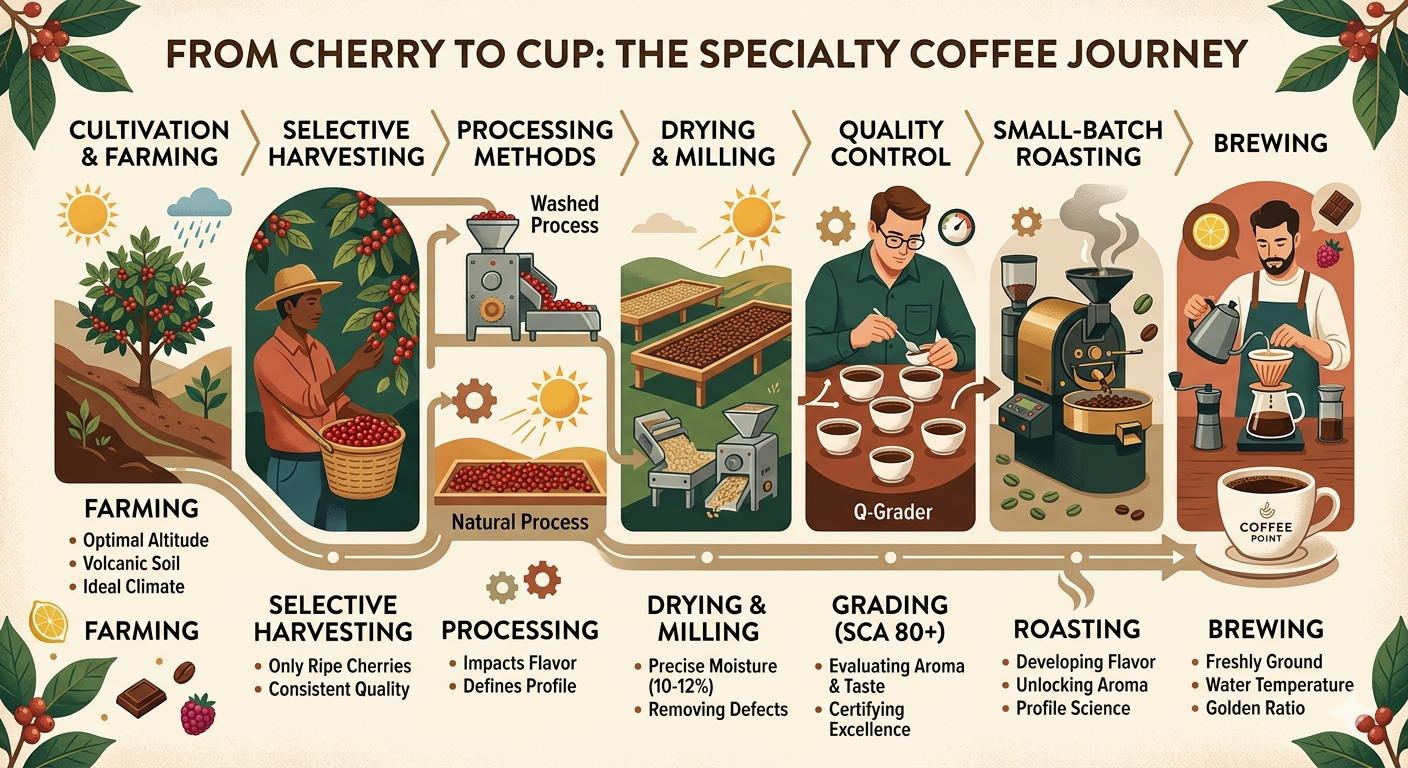
Specialty coffee starts as a ripe red coffee cherry — and its journey to your cup is full of care, craft, and precision.
Specialty coffee is much more than just a drink — it is a carefully controlled process focused on quality at every stage.
From harvesting ripe coffee cherries to roasting and brewing, every step affects flavor, sweetness, aroma, and overall cup quality.
Understanding the specialty coffee process helps explain why freshly roasted specialty coffee tastes cleaner, sweeter, and more complex than commercial coffee.
At Coffee Point, we believe great coffee starts long before brewing.
რა არის Specialty Coffee?
Specialty coffee refers to high-quality coffee that scores 80+ points according to Specialty Coffee Association (SCA) standards.
Unlike commercial coffee, specialty coffee focuses on quality at every stage — from farming and harvesting to roasting and brewing.
This attention to detail creates cleaner flavors, better sweetness, and more complex tasting notes.
SCA სტანდარტები: 80+ ქულა
To qualify as specialty coffee, beans must score at least 80 points based on SCA quality standards.
Coffee is evaluated for sweetness, balance, aroma, acidity, body, and overall cup quality.
Only carefully selected and properly processed coffee reaches specialty grade.
საიდან მოდის Specialty Coffee
Specialty coffee სხვადასხვა ყავის მწარმოებელ ქვეყანაში იზრდება, ძირითადად ისეთ რეგიონებში, სადაც არსებობს შესაბამისი სიმაღლე, კლიმატი, ნიადაგი და ნალექი.
თითოეულ წარმოშობის რეგიონს ყავაზე განსხვავებული გემოს პროფილი აქვს.
- ეთიოპიური ყავა გამოირჩევა ხილისა და ყვავილოვანი არომატებით, რაც მას განსაკუთრებულად გამორჩეულს ხდის.
- კოლუმბიური ყავა ცნობილია თავისი დაბალანსებული პროფილითა და სასიამოვნო სიტკბოთი.
- ბრაზილიური ყავა არის პოპულარული შოკოლადის და თხილის პროფილებით.
- კენიური ყავა გამოირჩევა ნათელი, ცოცხალი და წვნიანი მჟავიანობით, ხშირად კენკრისა და ციტრუსის მკვეთრი ნოტებით.
- ეკვადორული ყავა არის სუფთა, ნათელი და კომპლექსური, ხშირად ხილისა და ყვავილოვანი ნიუანსებით, რაც მას ძალიან ელეგანტურ პროფილს აძლევს.
ფერმა, სიმაღლე, ჯიში და დამუშავების მეთოდი საბოლოოდ განსაზღვრავს გემოს ფინჯანში.
ამიტომ specialty coffee ხშირად კონკრეტულ ფერმას, რეგიონს ან მწარმოებელს უკავშირდება.
ყავის ნაყოფის კრეფა
ყავა არის როგორც ხილი, რომელსაც ეწოდება coffee cherry (ყავის ალუბალი).
Specialty coffee წარმოებაში ფერმერები ხელით კრეფენ მხოლოდ სრულად მომწიფებულ, წითელ ალუბლებს, რათა მაქსიმალური სიტკბო და ხარისხი მიიღონ.
რადგან ყველა ნაყოფი ერთდროულად არ მწიფდება, ფერმებში მოსავალი ხშირად რამდენჯერმე იკრიფება სეზონის განმავლობაში.
უმწიფარი ან დაზიანებული ნაყოფი თავიდანვე იშლება, რათა შემცირდეს დეფექტები და გაუმჯობესდეს საბოლოო ხარისხი.
ხელით კრეფა vs მანქანით კრეფა
ხელით კრეფილი ყავა, როგორც წესი, უფრო მაღალი ხარისხისაა, რადგან მუშებს შეუძლიათ მხოლოდ მწიფე ალუბლების შერჩევა.
მანქანური კრეფა უფრო სწრაფია, მაგრამ ხშირად ერთმანეთში ურევს მწიფე და უმწიფარ ნაყოფს, რაც ამცირებს სიტკბოსა და სისუფთავეს.
ყავის დამუშავების მეთოდები
მოსავლის აღების შემდეგ ყავის მარცვალი გადის დამუშავების პროცესს, რომელიც დიდ გავლენას ახდენს საბოლოო გემოზე.
Washed Process - გაწმენდის მეთოდი
ამ მეთოდში ყავის ხილი მარცვლისგან შორდება გაშრობამდე.
შედეგად მიიღება უფრო სუფთა გემო, ნათელი მჟავიანობა და მაღალი სისუფთავე ფინჯანში.
Natural Process - ბუნებრივი მეთოდი
ამ მეთოდში ყავა შრება მთლიანად ხილთან ერთად.
შედეგად ყავა ხდება უფრო ტკბილი, ხილისებრი და სხეულიანი.
Fermentation - ფერმენტაცია
ზოგი მწარმოებელი იყენებს კონტროლირებულ ფერმენტაციას, რათა შექმნას უფრო რთული არომატები და უნიკალური გემოს პროფილები.
ეს ეტაპი ძლიერ გავლენას ახდენს სიტკბოზე, მჟავიანობასა და ხილის ნოტებზე.
გაშრობა და დახარისხება
დამუშავების შემდეგ ყავა შრება მანამ, სანამ ტენიანობა არ ჩამოვა დაახლოებით 10–12%-მდე.
გაშრობა ჩვეულებრივ ხდება მზეზე, სპეციალურ აწეულ საწოლებზე და შეიძლება გაგრძელდეს რამდენიმე დღიდან რამდენიმე კვირამდე.
სწორი გაშრობა მნიშვნელოვანია სტაბილურობისთვის, შენახვის ვადისთვის და გემოს ხარისხისთვის.
შემდეგ ეტაპზე მარცვალი იფილტრება ზომის, სიმკვრივისა და ხარისხის მიხედვით, რათა მოიშოროს დეფექტური ნაწილები.
დახარისხების შემდეგ ყავა ექსპორტზე გადის როგორც მწვანე ყავის მარცვალი (green coffee beans).
როგორ იხალება ყავა
მოხალვა გარდაქმნის მწვანე მარცვალს არომატულ ყავად, რომელიც მზად არის მოსამზადებლად.
მოხალვის დროს შაქრები კარამელიზდება და რთული გემოს ნოტები ვითარდება.
Specialty coffee-ში ხშირად გამოიყენება მსუბუქი და საშუალო მოხალვა, რადგან ის ინარჩუნებს წარმოშობის გემოს მახასიათებლებს — ყვავილოვან, ციტრუსოვან, კენკროვან, შოკოლადის ან თხილის ნოტებს.
Coffee Point-ში ყავას ვხალავთ მცირე რაოდენობით, რათა უზრუნველვყოთ მაქსიმალური სიახლე და სტაბილური ხარისხი.
ახალი მოხალვა პირდაპირ გავლენას ახდენს სიტკბოზე, არომატსა და საერთო გემოზე.
👉 შეიძინეთ ახალ მოხალული ყავის მარცვალი
დაფქვა და მომზადება (Grinding & Brewing)
მაღალი ხარისხის ყავის მარცვლებსაც კი სჭირდება სწორად მომზადება, რათა მიიღოს საუკეთესო შედეგი ფინჯანში.
ახლად მოხალული ყავა უნდა დაიფქვას კონკრეტული მომზადების მეთოდის მიხედვით:
- წვრილი დაფქვა → ესპრესო , თურქული ყავა
- საშუალო დაფქვა → V60 pour-over , ფილტრის ყავები
- მსხვილი დაფქვა → French Press
ასევე ძალიან მნიშვნელოვანი როლი აქვს წყლის ტემპერატურასა და ყავა/წყლის პროპორციას, რადგან ისინი პირდაპირ განსაზღვრავენ ექსტრაქციის ხარისხსა და გემოს ბალანსს.
ხარისხიანი მომზადების ხელსაწყოების გამოყენება — მაგალითად Timemore-ის საფქვავები და აქსესუარები — გეხმარება უფრო სტაბილური შედეგისა და უკეთესი ფინჯნის მიღებაში.
👉 აღმოაჩინე ყავის მოსამზადებელი აქსესუარები და აღჭურვილობა
ფერმიდან თქვენს ფინჯნამდე — Coffee Point-ში
Coffee Point-ში ჩვენ ყურადღებას ვაქცევთ specialty coffee პროცესის ყველა ეტაპს — ხარისხიანი მარცვლების შერჩევიდან დაწყებული, მოხალვითა და მომზადებით დამთავრებული.
ჩვენი მიზანი მარტივია:
ყოველდღიურად ადამიანებმა მიიღონ უფრო ახალი და მაღალი ხარისხის ყავა.
გიყვართ ესპრესო, V60, AeroPress თუ ფილტრის ყავა — ყავის გზის ცოდნა ფერმიდან ფინჯნამდე დაგეხმარებათ, რომ თითოეული ყლუპი კიდევ უფრო დააფასოთ.
👉 აღმოაჩინე specialty coffee Coffee Point-ში